Tuesday, 29 January 2013

Sex and the Rest Part II


On Monday it was sex


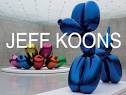
 Sotheby’s enlightened and/or entertained a packed auditorium of collectors and dealers when Tobias Meyer, Worldwide head of contemporary art, moderated a panel discussion titled: “Old Masters, New Voices.” The cast was what used to be called in the days of B Movies, a cockpit crew. Representing the megabucks world of contemporary art were John Currin
and Jeff Koons. Victoria Siddall Director of Frieze Masters the London art fair that brings together a tightly edited selection of dealers  in old and new art represented the potential for cross over. Luke Syson, and here we go again with egotistical job titles, the Iris and B. Gerald Cantor Curator in charge of the Department of European Sculpture and Decorative Arts at the Met. was there to represent just that.  He arrived at the Met a year ago following his big success curating the Leonardo da Vinci show at London’s National Gallery.

     This was the set up: Each panel member was asked to chose one painting and talk about why it means so much to him or her. The new art folks had to chose old art; Sysons had to pick someone contemporary. And the winners were:
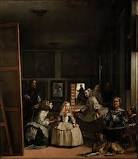
Currin: Tinteretto’s Susanna and the Elders. Koons: Titian’s “Venus and Adonis” in the Prado. chose another painting in the Prado, “Las Meninas” by Velazquez while Sysons went for Cy Twombly’s “Leda and the Swan.”  Currin and Koons did almost all the talking and an awful lot of it was about penises, nudes (by which they meant naked women) with dollops of pornography. Koons was winning; intelligent, knowledgeable, down to earth and a man enjoying life who sets about aiding and abetting other people to do likewise. It has rewarded him splendidly..all those cute rabbits and hearts have helped him bring paintings by Courbet and Picasso and more into the family home. Sysons choice of Leda and the Swan was yet more sex; only Siddall the only female, choice a painting with a different subject. This led Meyer to the plausible if superficial conclusion that men and women look at art differently. We were led to go home thinking that historically the two subjects of art have been sex and the artists themselves. Funny. Before the panel got going, I played the game of “what would I have chosen?” if I'd been on the panel. Instantly I knew it would have been “The Baptism” by Piero della Francesca. Not sex; not a painting about an artist. Still the event was enlightening and entertaining within limits. And Jeff Koons is a genuine art star even if the same cannot be said of his art.   

Sex and the rest Part I

SUNDAY in NEW YORK WITH LARRY

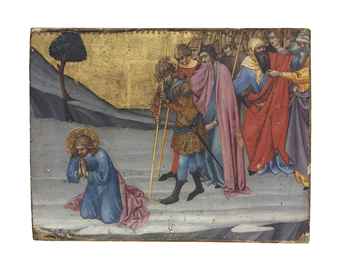
Saints Cosmas and Damian awaiting decapitation
 Christie’s was up first up with special events intended to enlighten and/or entertain as well as maybe soften up dealers and collectors in New York for the Old Master sales. They went for unadulterated substance. Sunday at 6 p.m. Larry Kanter, gave a lecture on "Thoughts about Connoisseurship." Laurence Kanter the Lionel Goldfrank III curator of European Art at the Yale University Art GalleryArt Gallery and curator of the Robert Lehman Collection at the Metropolitan Museum of Art is an expert on Italian Renaissance art and it was his focus.
    The auditorium was filled with people  who were there not because they needed to shelter from the cold or be draped with tinsel and glitter. I didn’t see anybody yawn as Kanter began with a rehabilitation of Bernhard Berenson’s  reputation. I was gripped. Kanter  referred to the great art scholar of Italian art as a“genius” of connoisseurship and set out to re-educate those who, puritanically, have insisted that dealing in works of art and forging independent opinions cannot co-exist-- and if they happened to the person who did both would be morally suspect. A villain.
  This last year as I reread Berenson it became clear that so much mud has been slung at him that it has buried awareness of his huge contribution to what we know and understand about Italian art. 
  Kanter reminded us that one of BB’s precepts was to look at a painting and pay attention constantly to what it has to say for itself – not what people have to say about it. Kanter then gave a bracing practical example of how he puts that into practice. Outside the lecture hall, in the rooms displaying upcoming paintings for the Renaissance sale hung a a Sienese painting circa 1400; the work of Taddeo di Bartelo. Kanter looked at it and came to the conclusion that“It is too good to be by him.” Further study led him to believe that it is by another Sienese, Gregorio de Cecco who was slightly older and a much better painter. This is one case when a possible error can only make Christie's smile. If Kanter's view prevails the painting will be worth lots more.

Monday, 21 January 2013

Shell shocked

In love with a shell

Just back from BRAFA; the Brussels Antiques and Fine Art Fair. It was brutally cold but inside the cavernous former postal sorting office plunked down in the middle of nowhere (if you happen to be staying in the center of Brussels), it was toasty. Just to cheer us up they had branches of cherry blossoms in the central aisles. Nice. I suppose There were more than a hundred exhibitors and thousands of objects, furniture, jewellery and paintings for sale and one shell that stole my heart. A shell. A three thousand year old shell. At the fair I ran into a collector I know and I tried to get her to come with me to see it. I can understand why she didn't want to troop up and down the aisles because I saw I seashell and feel in love. It was at the stand of Archeologie a Paris gallery. If I had a spare 220,000 euros, which is what the dealer is asking for, I would buy it. It does seem like an awful lot of money. Or maybe not. I have no idea of what the going rate for a "rare tridacne shell carved in the shape of a bird of prey (probably an owl)" is. Or if there is one. A quick Google tells me that tridacne is the largest bivalve mollusc. The king of seashells. Or anyway the giant among them. I have slept on it and no, I am not going to swap the roof over my head for a magnificent sea shell.

    This owl is said to have been carved in the Mediterranean in 8000 b.c. when the Phoenicians were in residence. Maybe he is not an owl; the label is more firm that this is the image of a bird of prey. Its face is menacing but magnificent .the incised carving both front and back is beautiful--feathering but also like a message --about what?. The creature has survived for thousands of years. I didn't dare ask to hold him. The catalogue says he is 10 x 18 centimetres probably too big to hold in one hand. But this guy has fantastic have presence.(Yes yes maybe the guy is a girl owl he just seems male.)

  What if I did have the money and the owl came to live in the house... Would we feel protected by him or scared?  I think maybe both but I am sure that metaphorically, at least, I would walk on tip toes when I went into the room where he was perched. Face to face with him I would feel awed. I can't help thinking that if Picasso had trotted along the rue Jacob where the gallery is, and had seen this owl, HE would have taken the creature home without having to sell his studio to do it. And really the owl is cheaper than a Picasso sculpture....if you are inclined to make buying decisions that way.


Wednesday, 19 December 2012

Delete, erase,expunge donors' names


It hasn't gone too far; it went too far maybe ten years ago. If there are art institutions where curators and directors are identified only by their names, roles and/or specialities I don't manage to come across them. As a matter of journalistic self-interest I never cite the donors names--they take up too many words and even without that I never feel I am given enough space to get across what I'd like to say. Just stumbling on such roll calls makes me start to growl. .

   In the spirit of the holidays (and owing to the perpetual drowsiness that is the gift of these darkest days of the year), I feel it would be inexcusably nasty to give examples. As soon as I wrote that I had a change of heart. (To left is growling under the influence of Christmas and the winter solstice.) So I'll name a few names just for flavor. John Guy, when he traveled from the Victoria & Albert Museum in London to the Metropolitan Museum of Art in New York became Florence and Herbert Irving Curator of the Arts of South and Southeast Asian Art, Department of Asian Art. Who are Florence and Herbert Irving? Even having attached their names to John Guy for whom I have a lot of respect did not prod me to make the tiny effort necessary to Google. So what's the point. And then there is Malcolm Rogers, the Ann and Graham Gund Director of Boston's Museum of Fine Arts.Please tell me: Isn't having the title Director of a great museum enough? And sorry Ann and Graham I'm not Googling you either. It's only personal, generically.

  Great that so many people give money to staff museums, build more attractive galleries, add lecture theaters and so forth. And it is easy to understand why the Trustees--and Directors--go along with donors' demands to have name tags in big letters attached to their largess so the public notices. Well folks, here's the news: We don't care about the names of donors only the results. So grow up and stop making such demands. It looks pushy, self important even silly. There have got to be better ways to honor largess. It is time to stop clogging up the titles of gifted contributors to our education and pleasure with rich peoples' names.  

Thursday, 6 December 2012

Dying for art

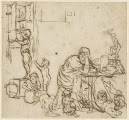
Everything about the this ink drawing surprised me except for how good it is. Adam Elsheimer (1578--1610) is  known for his paintings on copper--not canvas or panel. They are usually small and often night scenes like the Flight into Egypt below. Always they are arresting; walking through a gallery and coming on one of these paintings, it is as if the museum's wall had suddenly opened up and I am looking directly into luminous, poetic Elsheimer's 's imagination. I am drawn deeper in and I like every minute of it. The drawing of "The Artist Despairing of his Poverty," took me somewhere less alluring but more compelling if also disturbing.


Drawn in ink when artist was about 25 years old this portayal of an artist bent over his work table while his child and the family pets scrounge around looking of a crust of bread, The composition is well judged; the lines confident and fluent which made the subject somehow more unnerving. It is very likely autobiographical; a work of art like the paintings but not so entirely a work, also, of the imagination. Elsheimer was only 34 when he died-- famous and borderline broke.

There are lots of good show in New York right now. The Metropolitan Museum of Art alone has Bellows and Matisse (both of which I've written about for The Economist.)  I very nearly didn'tgo to see the show  Old Master drawings from Munich at the Morgan Library and Museum. There just wasn't time. But someone who did told me I shouldn't miss it. When it comes to art, unlike many other things, I almost always listen to my husband's advice, so on the day we were flying back to London, I cycled up to the Morgan. It is a fantastic show. 
   With all the carrying on about last night's Sotheby's auction of a Raphael drawing for a hammer price of 29.5 million pounds you might think Raphael only did one or two.  Dürer to de Kooning: 100 Master Drawings from Munich at the Morgan includes works often arresting works by Rembrandt, Rubens, Michaelangelo and Van Gogh. Things works are seldom on view. It probably is the one show in town not to be missed. Of all the treasures in it, it is the moving self-portrait of Elsheimer in despair that most moved me and stays all to clearly in my mind. When it comes to making art or trying to, despair is no stranger even when you have the money for the rent.


Thursday, 22 November 2012

Toys for a queen's inner child


Media image

Father
Furniture can be sexy. Who would have thought. Also it can be gorgeous, exquistely made, magical and hardest for some to believe, a work of art..  Exhibitions of furniture are usually worthy, which is to say instructive and dull. This one is anything but.  “Extravagant Inventions: The PrincelyFurniture of the Roentgens,” now at the Metropolitan Museum of Art is an unexpected treat. The woods –sycamore, rosewood, apple among them are warm and beautiful. The inlaid marquetry is as good as it gets with perfectly inset flowers, cherubs, comedia dell’arte figures, historical scenes and plenty else besides--let's not forget cows. But best of all are the secrets. Marie Antoinette and Catherine the Great were patrons of the Roentgens. These desks and chests, chairs, cabinets and caskets all practical objects, are also princely toys. Turn a gilded key in a door of a cabinet and it springs opens to reveal boxes that open out to reveal many hidden drawers;  the sides of a desk  springs open to reveal slanting stands on which to rest heavy books like illuminated manuscripts and on it goes with parts of the furniture sliding, jumping out, turning and springing..
Son

Media image
Before
  The sixty pieces on view all made by in the eighteenth century by Abraham and his son David Roentgen and their team at their workshop in Neuwied, German  This is the largest show of Roentgen furniture ever staged in the United States. Unprecedented loans have come from private and public collections at home and abroad including six pieces never before loaned by Berlin’s Kuntsgewerbe Museum. Here, the use of videos doesn’t seem merely an attempt to appear to be up to date technologically. It helps. As soon as I figure out how to add the vidoes to this post I will. For now go to the Met's website. They show  several pieces being opened.. Alongside the Roentgens’ sizeable “Automaton of Marie Antoinette” of a large, doll-sized queen sitting at her dulcimer, is a video of what happens when the piece is wound up. The full skirt of her gown hides the mechanism that directs beauty to turn her bewigged head as if bemused by the music she makes as she strikes the keyboard . The lovely sounds fill the galleries providing just a touch of eighteenth century atmosphere—a touch is quite enough. Often at exhibitions I feel that paintings mean most when hung at home on the wall and that there is always a loss when seeing them in public exhibitions. But here, displayed in the museum the power as well as the spectacular attractiveness and craftsmanship of Roentgen pieces shines out more than one any single one I've seen does when on show in a museum period room.
 Extravagant Inventions: The Princely Furniture of the Roentgens
after
  Not surprisingly for a writer, my favorite is a writing desk designed by Abraham Roentgen. In fact, this loan from the Rijksmuseum, is encrusted with such fanciful, luscious inlay it probably made anything its owner wrote seem feeble in comparison. A dozen woods from walnut to olive were used, some of them stained. Tortoiseshell, mother-of-pearl, ivory, gilded bronze, brass, copper and silver were used for the inlays There are coats of arms of the von Wallendorfs who commissioned the piece. There are also putti and flowers, Charity and Justice makes appearances as do evocations of black and white tiled rooms and-- at the side-- pastoral scenes with flute playing farmer and munching cows.. Just about every part of this desk springs open to reveal more drawers and niches; the base becomes a knee- rest for praying and the top turns into a small altar.(The von Wallendorfs were Catholic.)
   The exhibition which took three years to organize, is the outgrowth of the passion for the Roentgens which Met curator Wolfram Koeppe has had since his student days. I wrote a profile of Koeppe for 25 years of TEFAF published last March. He has learned huge amounts since his student days but has never lost his love for European works of art. Lucky us.