Friday, 13 April 2012


Improve or destroy? Will Laurence Graff, aka The King of Diamonds, yet again buy a famed historic diamond only to recut it to make it more saleable?


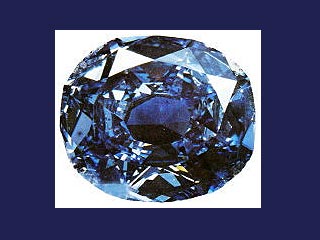
That is what he did to the big blue Wittelsbach (see above photo © Ernst A. Heiniger ) after he bought the historic stone at Christies. I wrote about that unhappy saga in the Financial Times. The importance of such a stone is not only its carat weight and color but the less commercially measurable associations it has with the people who have worn it, owned it, given it, treasured it, hidden it, used it for power and glory. Once recut it is just a big fat diamond. And, in the case of the king of diamonds, a brand nam.  He promptly renamed his  recut blue stone, the Wittelsbach-Graff.
Le Sancy.jpg


 Now the Beau Sancy (right) is coming up for auction at Sotheby's and there is reason for lovers of extraordinary historic gems to worry.  This pale yellow diamond was probably found at Golconda, and certainly found in India, more than 400 years.It weighs a smidgen under 35 carats. It has many royal associations not least of them this: The Sancy was worn by the Florentine Maria de' Medici at her 1610 coronation as Queen Consort to the French king Henri IV. (See below.) It will be auction in Geneva on May 14-15 with an estimate of from $2-$4 million.

Saturday, 7 April 2012


Cima da Conegliano in Venice, Paris and at a click away on Google Books.

The Baptism of Christ - Cima da Conegliano


Art lovers or just the art curious can raise a glass in a toast to Google books. It isn't likely that anyone will depend on the site the way we all depend on googling. But what a world it opens up; it's like having an amazing art library a couple of clicks away. The time it saves; the money and space. Yesterday, I was reading the notes I made a couple of days ago in Paris at the Musee du Luxembourg's just opened exhibition devoted to the Italian Renaissance painter Cima da Conegliano. (Above is my favorite of his paintings. It is not in the show but hangs above the altar in the hard to find-- even for Venice--church of St. Giovanni Bragora.) Even I have trouble making out my handwriting and it's at its worst when I am looking and writing at the same time. I could not figure out the words I'd copied from the wall text which quoted the art scholar Bernard Berenson.  I certainly know the source from which they were taken. Literally seconds later I'd found both, thanks to Google books. His book, Venetian Painting in America was right there.Front Cover As its cover image is now right here. With a few more clicks taking me to the pages where Cima is mentioned, I found the very words:  “No other master of that time paints so well the pearly light that models the Italian landscape with a peculiar lightness and breadth.” To my mischievous delight the museum's wall text (as well as my scribbles) had got it wrong. "Silver" is not pearly, "models" is not the same as envelops. I did not point this out in my ==very favorable--Economist review of the show which will appear at the end of the coming week.  

Friday, 30 March 2012


Sceptre                      DAZZLED

The most glittering of the events keyed to the Queen's Jubilee must be the redisplay of the Crown Jewels in the Tower of London which opens to the public today. Just have a look above at the top of the seventeenth century sceptre held by the monarch during the coronation. It holds the 563 carat Star of Africa diamond. Oh and its practical too. The diamond pops out to be worn separately as a pendant on other occasions.Fuzzy image though it is its knock out grandeur still comes across. The Star of Africa is also called the Cullinan I diamond. It is the second largest diamond in the world and was one of nine gems cut from the more than 3000 carat original Cullinan stone. The Cullinan II is also on display. It sits smack in front of the Imperial State Crown of Great Britain.


  Yesterday morning the Princess Royal opened this exceedingly popular tourist attraction. Last night DeBeers, its lead sponsor, hosted a party and private view chiefly for specialists especially those employed at the various Royal Palaces. I couldn't go to the 8 a.m. press preview but DeBeers p.r. kindly invited me to the evening view. It was a privilege and a treat. One of the seldom mentioned but widely enjoyed perks of journalism is going to private views where it is possible to see and enjoy works of art in the absence of crowds. In this case the first of the privileges was the twilight into night visit to the Tower of London itself.


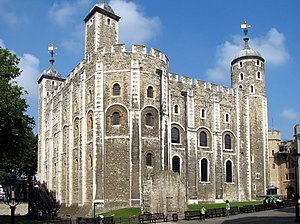
Guests were entertained at a reception in the former armoury which is now a restaurant. What with the champagne (and canapés) all was convivial with chatter and laughter to match. But outside all was silent and the Tower was magnificent.Presumably the famous ravens are early to bed. Candles lit the way across the long cobbled approach between the outer walls of the fortress and its buildings. The White Tower, scene of so much misery, now stands elegant and somehow pristine in the moonlight.


 What could be a better preparation for the sight of the Coronation Regalia when it was time to make our way across the courtyard, through a door like an enormous entrance to a bank vault and see the often eye popping gems. An airport like people mover will take tourists to this most popular of attractions slowly but surely alongside the display cabinets but last night they were still and we could stand and study or ogle as long as we liked. 


  It is perfectly pointless to say that the Cullinan diamonds are vulgar. Rocks of this size are intended to signify
status and power and that is the job they most certainly did. There is much music and images of pageantry including film of the last coronation, that of Queen Elizabeth II almost sixty years ago, well before most of the visitors were born. The gems sparkle as if the event had been sprinkled with star dust.And here in the Tower of the principal sources of that light. It was meant to enchant and impress and to remind those present and all those to whom they spoke and wrote of majesty and might. In a constitutional monarchy the message is diluted and that is all to the good; but the messengers are still magnificent-- and for those with a weakness for such things at least--a pleasure to see.


AND ALSO:   For those who want to own a symbol of power and status all of their own, on May 14 in Geneva


 Christie's will be auctioning 70 lots of jewels--contemporary and antique and just plain big time rocks-- belonging to philanthropist Lily Safra. Among them are 18 pieces--the largest every single offering--made by JAR, the Bronx born --like your blogger--Paris based Joel Arthur Rosenthal, creator of extraordinary and very expensive gem- set objects of art to wear. The sale is estimated to make a minimum of $20 million all of which will go to 20 of Mrs. Safra's charities. 

Wednesday, 28 March 2012

The law of unintended consequences or Why I don't write about cutting edge art--mind you maybe Gillian Wearing isn't cutting edge at all but is considered a modern master.


Tuesday March 27 went to the Whtiechapel Gallery in London. I hadn't been for ages. I went because my husband wanted to go to the opening of a small exhibition of loans from the Government Art Collection Fund. These are works from its collection which Prime Minister's have chosen to hang in their residence at 10 Downing Street. (Above an image of one of the state rooms in wartime.) At the Whitechapel the choice of what to show was made by the staff at number 10.  It was not easy to find this show. But the main exhibition was impossible to miss. Entering the Whitechapel's usually handsome, airy space, the place looked like an art storage warehouse. It was filled with tall, wide crates in a cockeyed zig-zag arrangement. These turned out to be the backs of roomlets created as viewing spaces for videos in the Gillian Wearing   retrospective. Presumably the artist wished to create this brutalist welcome to her show. Surely an imaginative museum designer if not the artist herself could have created a series of rooms the outside of which were part of the art. Then again, as the art itself turned out to be dead ordinary it was all of a piece after all.


 Upstairs there were large photographs--oversized has become the new normal.  Many of the images were of the artist wearing a clearly visible mask of her own face or the face of others including her family. This is a homely, less engaging version of Cindy Sherman==at that is Wearing at her best. Many were photographs of "the man in the street" holding hand written signs which were--or were not--a commentary on their feelings or the state of the world. (see above.)The over all impression was of banality and lack of vision. When it comes to art, with two strikes of this kind, you are out.
   VIP the invitation read. The crowd, mainly in their twenties and early thirties, were mostly drinking beer from bottles (the new champagne although it has been the vogue for half a dozen years). Dress was either military uniforms, nurses outfits or school children's garb and even those in Prada, nerd division, carried school bags. Fortunately for us, white wine was also available and fortunately for others pastel colored small bottles of possibly health boosting stuff.
   Eventually we found the small gallery upstairs with the Art Collection pictures. The most interesting was a portrait of Ada Lovelace, Byron's daughter. Augusta Ada Byron, Lady Lovelace was a hugely gifted and


 accomplished mathematician. She worked with Charles Babbage, on  the development of  
on the first mechanical computer, The Difference Engine. (see above.). She wrote its program and is widely credited as having been the first computer programmer.

We were prevented from leaving the Whitechapel the way we had entered so found our way to a corridor through which we were expected to exit. My husband went off to the W.C. and I drifted into a cozy, modernist room off the corridor. Red wine was quickly offered and it was good (that made a welcome change). There were snacks on a table. This appeared to be a gathering place for those who didn't fit the profile of Whitechapel VIP's. We didn't either but these folks looked faintly related or anyway like people belonging to yet another world as it turned out they were. They came in all ages from gray heads to kids. At the front of the room with windows looking out onto the street was a table piled with books, copies of one book: "A Man in a Hurry: the World's Greatest Walker. The Extraordinary Life & Times of Edward Payson Weston"  I'd stumbled into a book launch. And what a dandy subject: A Victorian, called "the father of
   

   pedestrianism, who was a hugely popular figure if also, perhaps, a part time charlatan. As I was taking this in my husband reappeared and James Corbett, the publisher of deCoubertin Books approached. They describe themselves as a "small family run enterprise."  They want to bring out two or three non-fiction books a year mainly about sport. Their aim is to publish readable works but not guff or fluff. The list will be kept small maybe for money reasons but also==and listen to this fellow writers--because they want to give full attention and support to each book on their list.
   What started out as a disappointing even irritating evening ended up sending us out into the streets of East London with smiles on our faces, books under our arms and the feeling that contemporary literature (and art) can still be an adventure and even a source of joy.

Monday, 19 March 2012

All sorts of treasures--Not jaded after this my eleventh annual visit to TEFAF


Just back from three days at TEFAF (The European Fine Art Fair), in Maastricht the Netherlands.  My first impressions--and opinions--can be found in Prospero, The Economist's art blog,  with the title "Silver threads among the gold."  But with 260 dealers exhibiting there is so much to see that it was only in my last few hours at the fair that I saw some of the art I most coveted. Two are sculptures from very different periods; the third is a display of chairs, yes chairs, that is a knockout.


This marble sculpture is displayed at the front of the stand of Milan dealer, Altomani &Sons. It is an engaging Roman marble of the forever young and mischievous golds of love Eros and his baby brother Anteros. The carvings date to the 1st Century A.D.
The thirty inch high sculpture as now seen is an ensemble put together in the Renaissance. It is the stance of Eros and the gentle yet attentive expression in his eyes that makes this work especially moving. According to some versions of the myth, Eros was lonely and Anteros was created as his companion. Here the artist appears to be showing Eros at the very moment he discovers this marvelous gift. Altomani is asking about euros 1.3 million. It is a honey.


i
Florence is the home base of the Moretti gallery which also has brances in New York and London. They are well known as dealers in fine Italian gold ground paintings. With the arrival of Andrew Butterfield, people have come to expect outstanding sculpture, too. So it is at this year's TEFAF. The work above was front and center at their stand. No one could miss this lion who is both ferocious and lusciously modelled. The piece was made about 1715 by Giovan Battista Foggini. Although the sculpture looks like a bronze it is in fact made of terracotta.

There is strong evidence that the lion is a model for a monument to Queen Anne of England. Parliament put forward extravagent schemes to celebrate her reign, almost of none of them, including this monument, were carried out. Moretti asjed about euros 400,000 and has sold this king of beasts to a European private collector..

In both of the above cases, the price of these exceptional works seems a steal when compared with, for example, the small Picasso terracotta of a centaur for which the Galerie Krugier is asking euros 9 million. Picasso was a great sculptor than painter and it is a delightful little sculpture but 9 million? When you could buy both of these wonders and have change from 2 million.


Modernist furniture dealer, Brussels based Yves Macaux can be relied on to have outstanding objects. This year at TEFAF he has produced a particularly imaginative and illuminating selling show exclusively of chairs. Among them are elegant examples by Josef Hoffmann, Adolf Luce and Henry van de Velde. The pair that grabbed my immediate attention were chairs designed in 1902/03 by Koloman Moser, an artist new to me.
These striking pieces are sleek and a showy beauties. They are made of burr elm with Egyptian inspired decoration inlaid in veneered snakewood, black maple and mother-of-pearl.  I fancied every chair on the stand, in fact. But what makes the display so outstanding is that it brings out the special, sculptural qualities--and presence--of each chair. These are pieces of furniture to sit on, of course, but they have another life as works of art, too.

Friday, 9 March 2012

gimme shelter

It was a nice kind of shock  that people were as desperate to get into see the Leonardo Da Vinci exhibition which recently closed at London's National Gallery as they were to get the hottest designer handbag or to view the latest episode of Downton Abbey. Well, it was a once in a lifetime chance to see the largest ever retrospective of paintings by one of the greatest artists in the history of Western art even if that meant a total of nine pictures. But now it seems this rushing to see art is a trend.

The Royal Academy exhibition of David Hockney's big and lurid wooded scenes is packing them in. The National Portrait Gallery show of 100 portraits by Lucian Freud (at least three quarters of which are likely to be soon forgotten) is also a hot ticket. In all cases, opening hours have been extended, queues form in the morning to get day tickets. The shops are doing a terrific business. No one would wish hard times on anyone...but fears about meeting mortgage payments, keeping jobs or even getting one in the first place...are sending people to museum exhibitions. Unlike inflation, printing money and vanished interest rates on savings, this is a heart lifting by product of the financial mess we're in.
   Who knows, maybe it is because I am a prude but more likely it is because I am a cynic, that I have a hunch there has been a parallel boom in on line pornography watching. But why think about that?  Or for that matter why think about the work of some of the painters drawing the crowds? Wherever else people are seeking solace, it's cheering that so many people want to spend what discretionary cash they have looking at art. I don't think much of the Hockney paintings but the photomontage's look better than ever and Freud's early portraits never looked anything but haunting.

Monday, 5 March 2012

TEFAF Principal Sponsor - AXA ARTOff to Maastricht next week for my tenth (not good at counting so maybe ninth) visit to TEFAF, the biggest and best antique and arts fair. What I love most about it is not the paintings for which it is famous, but the amount, quality and variety of objects of art --from Renaissance spoons with coral branch handles (sold by Georg Laue last year) to the bicycle brooch with diamond wheels sold by Wartski and now in the Boston Museum of Fine Arts. It's like an enormous treasure hunt. Of course if you find treasure there you've got to pay. With so many top dealers trekking to the far south eastern corner of Holland and setting up camp for two weeks, this is not a place for bargain hunters. Mind you, there always are a few.